
PEERLY CAMPAIGN INTELLIGENCE | SEPTEMBER 2026
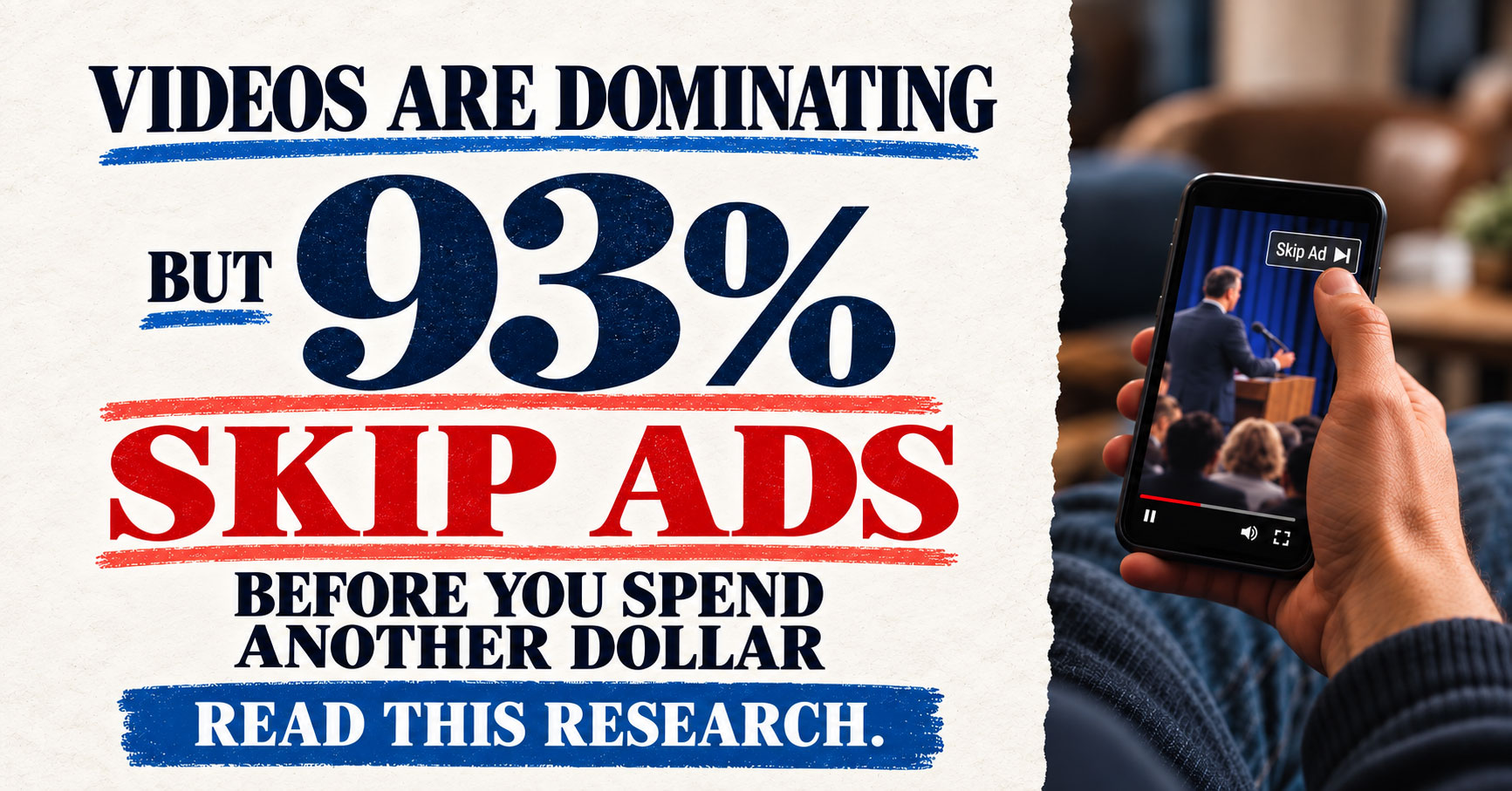
93% of consumers skip or block ads. Yet political campaigns are still pouring millions into advertising voters have trained themselves to avoid.
This research uncovers the truth about video ad spending.
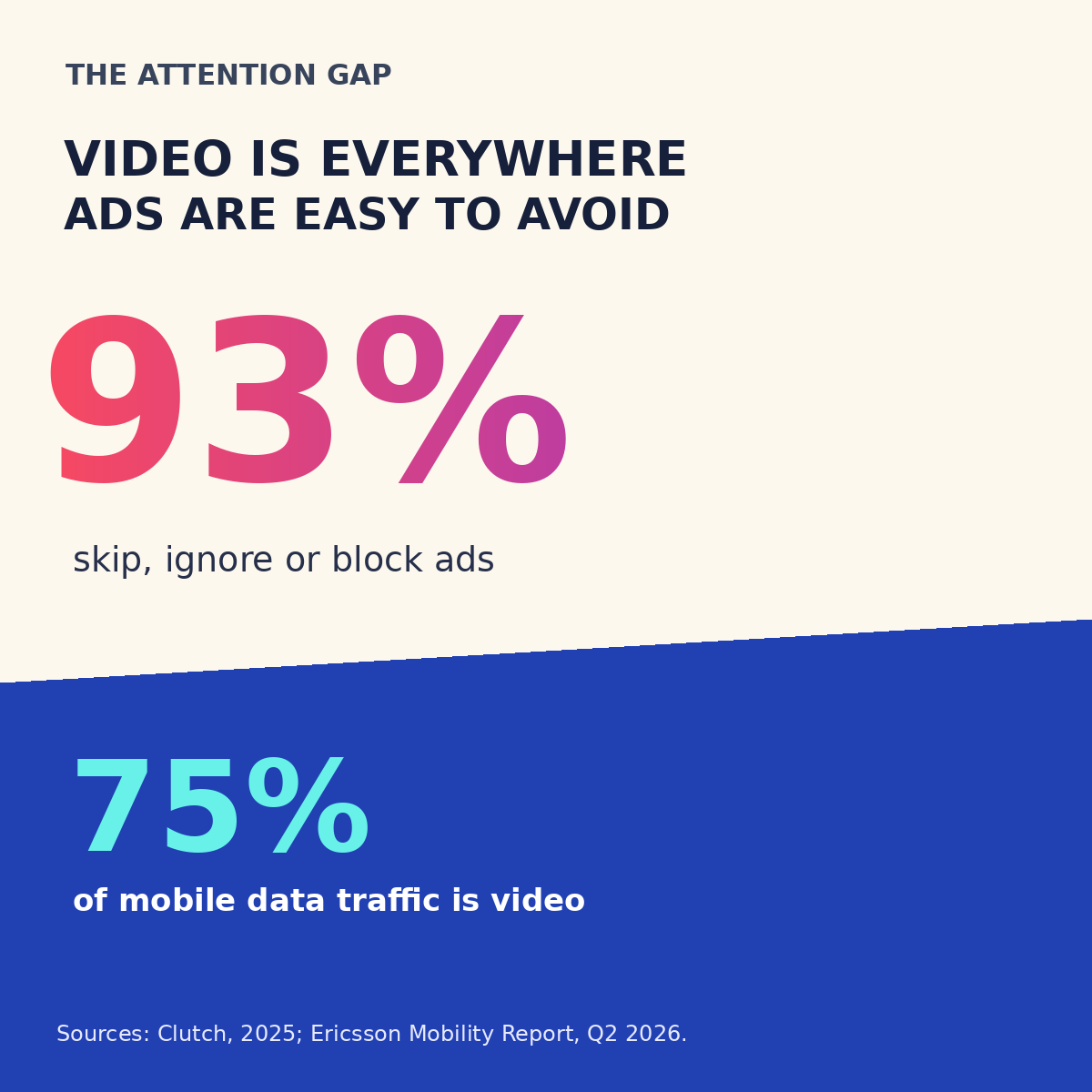
Ninety-three percent of consumers skip, ignore or block advertising. That is not a warning buried in a media report. It is the number that should stop every campaign manager, consultant and media buyer in the middle of a plan. Nearly everyone has learned how to make an ad disappear.
Here is the contradiction: video now generates roughly 75 percent of all mobile data traffic, and YouTube Shorts alone draws more than 200 billion daily views. People have never watched more video. They have also never been better at escaping the advertising around it.
This is the opening for a new political media channel. Keep the motion, emotion and speed that made video dominant. Change the delivery. Put the message directly in the hands of the voter the campaign chose to reach.
That is the idea behind Peerly Video In Motion™: direct-to-mobile political video with up to 4K clarity, AI-assisted presentation and a measurable path from the message to the next action.
Video won the phone. The scale of the change is difficult to overstate. At Cannes Lions in 2025, YouTube CEO Neal Mohan announced that Shorts had surpassed 200 billion daily views. Ericsson reports that video represents about three quarters of all mobile data traffic. The phone is no longer simply a place where people sometimes watch video. For hundreds of millions of people, it is the primary video screen.
Short-form video fits the way people move through the day. It is quick, visual and easy to understand in a checkout line, on a train, between meetings or while waiting for an appointment. It can work with the sound off. It can fill the screen. It asks for seconds instead of minutes and can communicate face, tone, emotion and contrast faster than a paragraph can.
Campaigns responded by learning the grammar of the format. They shortened commercials, moved the strongest visual into the opening seconds, added captions, created vertical edits and put the candidate on screen immediately. The creative evolved for the phone. The distribution model largely stayed the same.
The feed solved discovery not attention. Social platforms are remarkable discovery engines. Their algorithms can assemble an endless stream of creators, news, sports, outrage, humor, recipes and friends that is tuned to keep a viewer moving. That is valuable when a campaign wants broad discovery or public conversation. It is brutal when the campaign is buying an interruption.
A polished political commercial does not merely compete with another advertiser. It competes with the next swipe and with content the voter actively chose. The campaign may spend tens of thousands of dollars producing the right message, then place it inside an environment that lets the viewer erase it in less than a second.
A peer-reviewed study of digital public-service video advertising found that only about 22 to 24 percent of Instagram Reels placements and roughly 11 to 22 percent of skippable YouTube placements were viewed through completion. The exact performance of any political campaign will differ, but the distinction matters: an impression, a playback, a completed view and actual attention are four different events.
Campaigns can optimize the first two seconds forever. They can cut the spot again, add louder captions and buy another audience segment. Those changes may improve results, but they do not change the bargain. The campaign is still renting a brief interruption inside somebody else’s content stream.
The answer is Video In-Motion. Peerly Video In-Motion™ brings a campaign’s most powerful creative into the text-message experience. The campaign chooses the voter, the moment, the message and the next step. There is no crowded feed competing for the next swipe and no platform algorithm deciding whether the argument gets another second.
The product supports video delivery in up to 4K clarity, with full 1080p HD available for longer clips up to 60 seconds. AI helps campaigns create or select thumbnails, add captions for silent viewing and shape the presentation for the mobile screen. Supporting copy, links and replies turn the spot into a complete voter contact instead of another disposable impression.
Campaigns do not have to throw away the creative they already produced. Television spots, digital video, candidate biographies, contrast ads, rapid response clips and turnout appeals can all move into a channel built for direct delivery and response.
That shift changes the unit a campaign is buying. A feed impression asks a platform to place the ad in front of someone who may match an audience model. Direct-to-mobile video begins with the campaign’s own compliant voter universe. Persuadable voters receive persuasion. Identified supporters receive turnout creative. Past donors receive fundraising appeals. One county can receive a localized version of the statewide closing spot.
The commercial is no longer an ad wrapped around somebody else’s content. Inside the message thread, it becomes the content. The video delivers emotion. The surrounding text adds local context or proof. A trackable link creates the next action. The reply path lets the voter answer.
The text inbox starts with an attention advantage. Pew Research Center reports that 98 percent of American adults own a cellphone and 91 percent own a smartphone. CTIA cites a 98 percent open rate for text messages. That does not mean every recipient watches every video, but it clears the first barrier that defeats so much advertising: the contact is noticed in a channel people routinely check.
The campaign is not waiting for the right voter to tune into the right cable program, open the right streaming service or scroll the right social platform at the right moment. The message reaches the mobile device associated with the voter record the campaign chose. That is a fundamentally different starting point from hoping an impression survives a crowded feed.
Then the real-world numbers arrived. The most important new evidence comes from a September 2026 edition of Impressions to Ballots, published by Cross Screen Media and written by Chauncey Southworth. The article reports a controlled political-texting test conducted by Battleground Impact in a statewide down-ballot race with no other race-specific advertising.
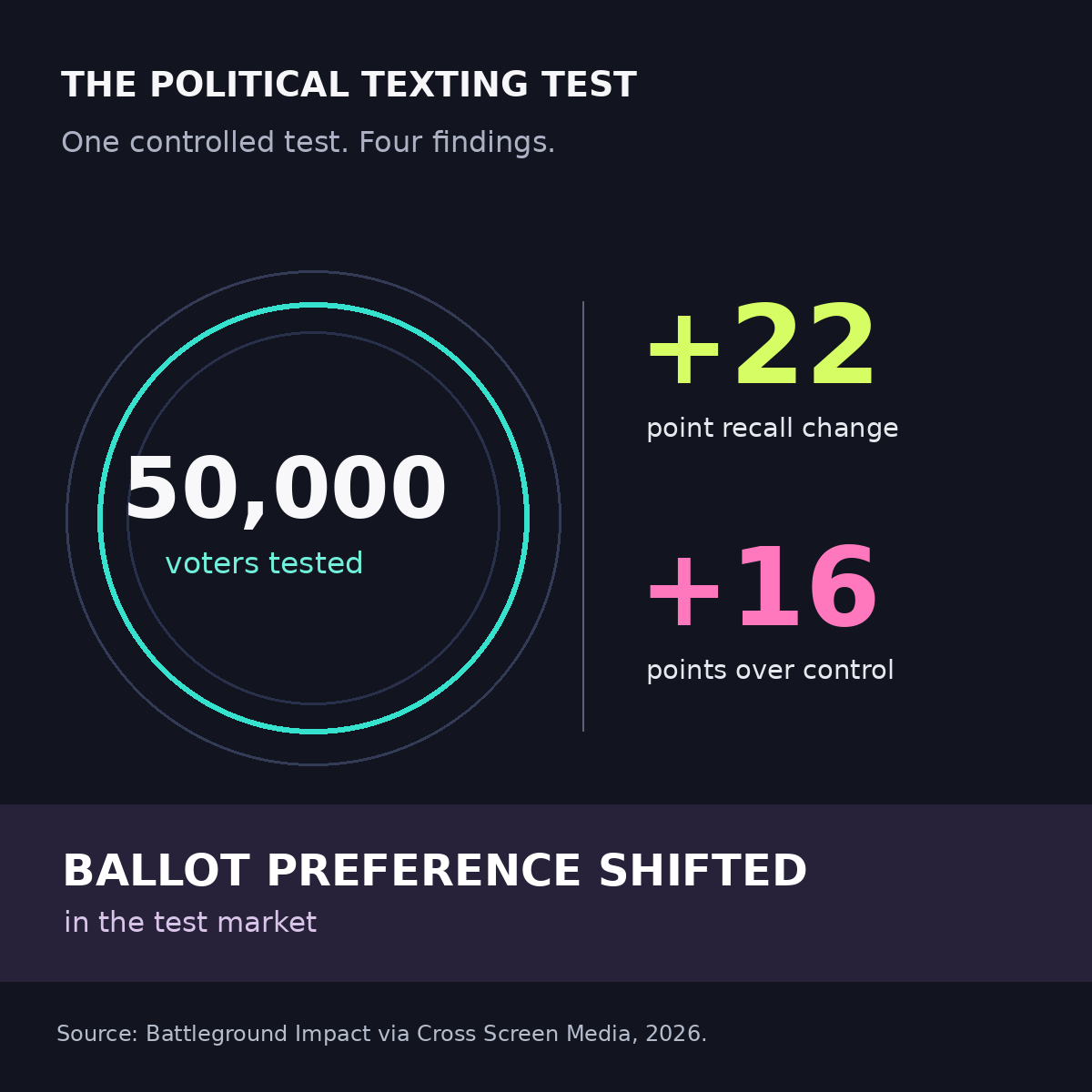
Battleground Impact selected 50,000 voters across two media markets. The audience included low-turnout Republicans and high-turnout persuadable voters. Voters in the test market were split between two videos, one positive message about the candidate and one negative message about the opponent. Voters in the control market received nothing.
In the post-test survey, ad recall in the test market increased by 22 percentage points. That was 16 points above the control market. The published summary also reports that ballot preference changed clearly in the test market after voters received the texts.
Four findings campaigners should not miss
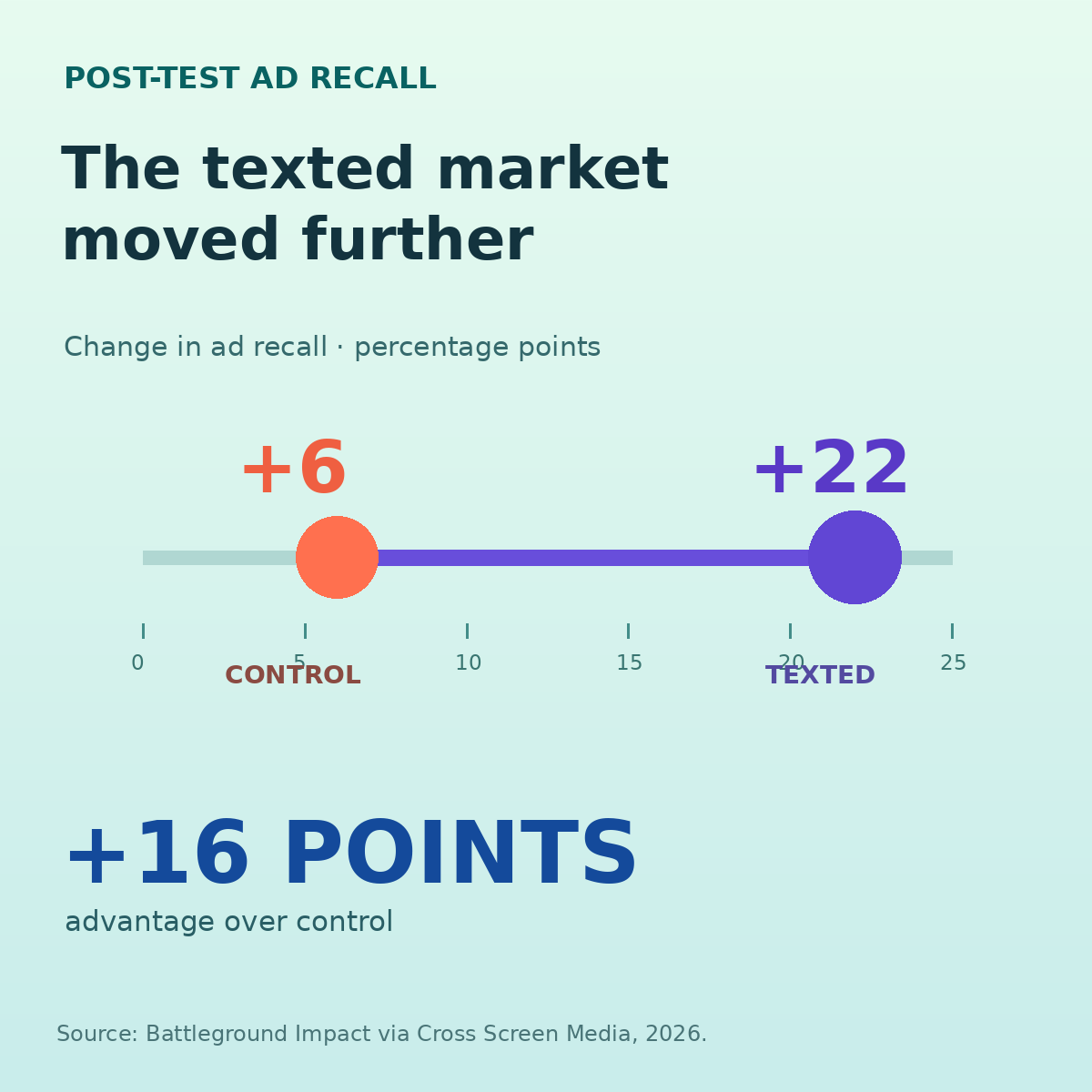
First, the message registered. A 22-point increase in recall in the texted market and a 16-point advantage over control is the kind of gap that forces a media team to pay attention. The channel did not simply deliver a file. It helped put the argument into memory.
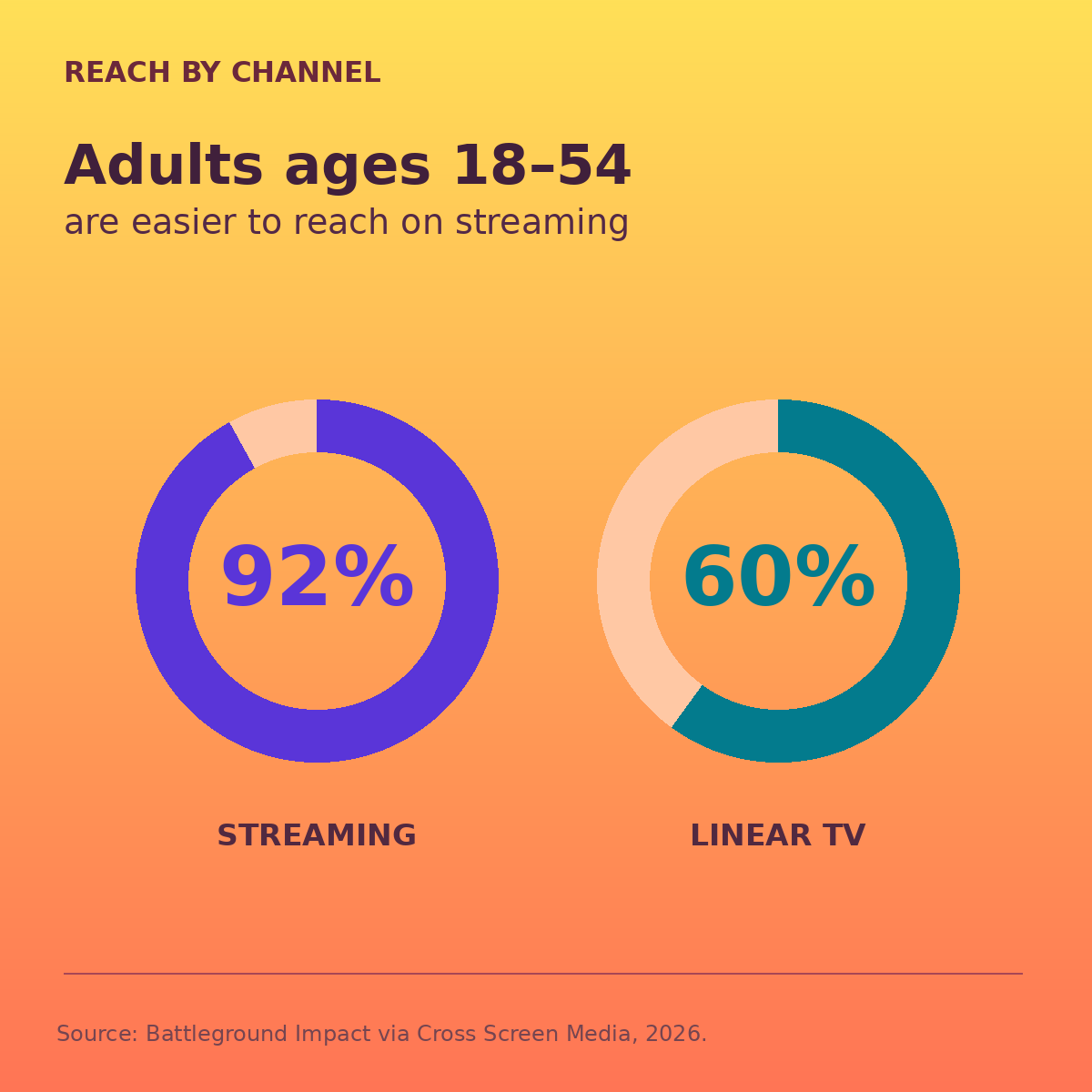
Second, young voters produced the strongest recall lift. That matters because the same voters are among the hardest to reach with traditional television. Battleground Impact reports that 92 percent of adults ages 18 to 54 are reachable on streaming compared with 60 percent on linear television. A campaign that depends heavily on broadcast and cable can leave a large part of its persuadable universe underexposed.
Third, frequency mattered. Southworth wrote, “The more texts a voter opened and read, the more likely they were to recall the messaging.” That finding matches a basic truth campaigners already understand: one contact may introduce an argument, but repeated quality contacts make it familiar enough to shape opinion.
Fourth, the result did not stop at awareness. The published report says ballot preference changed clearly in the test market. Recall tells a campaign that the message entered the voter’s mind. Ballot movement tells it that the message may have changed the decision that matters.
The study offers something the broader media statistics cannot: a campaign test tied to memory and vote choice. Campaigns do not persuade by securing one theoretical impression. They persuade by reaching the right voters with enough high-quality contacts for the argument to register. Texting can give media planners a direct, measurable way to add frequency among voters who may be hard to reach through broadcast or cable.
The larger lesson is coordinated reach. Cross Screen Media’s conclusion is bigger than a single channel. Voter contact needs a coordinated strategy. Campaigns should identify which voters are receiving enough television, streaming and digital exposure, then use text, mail and field to close the gaps. A voter who is difficult to reach on linear television should not simply receive fewer campaign contacts by accident.
That requires vendors to share useful data. The television plan, digital buy, mail universe, texting program and field operation should not live in separate rooms. The campaign needs one view of who has been contacted, how often, through which channel and what happened next. Video texting becomes most valuable when it strengthens the whole plan rather than operating as an isolated blast.
Frequency also needs intention. The goal is not to send the same message endlessly. It is to sequence the argument: introduce the candidate, establish the contrast, prove the claim, answer the objection and close with a clear action. Direct video gives campaigns a channel where that sequence can be targeted, measured and adjusted while the race is still moving.
When the commercial becomes the conversation
The reported experiment tested political persuasion texts carrying video. That matters because video can compress emotion, character, contrast and story into a format already native to the phone. The text surrounding it can then do work that a stand-alone feed impression cannot.
| Element | What it contributes | Campaign use |
|---|---|---|
| Video | Emotion, identity, contrast and memorable storytelling | Persuasion, biography, contrast, rapid response |
| Message copy | Local context and a clear reason to watch | Issue framing, deadline, geographic relevance |
| Link and reply | Evidence, action and two-way response | Donate, volunteer, RSVP, request a ballot, identify support |
A direct video message can therefore act as a complete voter contact rather than a fleeting impression. The campaign selects the audience, supplies the creative, explains why it matters and gives the voter a next step. A reply can also create new campaign data: support, opposition, issue questions, donor interest, volunteer interest or sign requests.
That response data can change the next contact. A supporter can move into a turnout or volunteer stream. A donor can receive a follow-up appeal. A voter with a policy question can receive campaign-approved information. A negative reply can be recorded instead of triggering more irrelevant persuasion. The message becomes part of a living voter record rather than a number inside a platform dashboard.
With Peerly Canvasser AI, incoming replies can be organized by intent and tone, useful information can be recorded and campaign-approved responses can be prepared at scale. The campaign is no longer limited to showing a commercial. It can listen, learn and decide what should happen next.
That is the difference between advertising at a voter and communicating with one.
4K clarity AI assistance and 3,000 percent growth. Traditional MMS often forced a serious tradeoff. Campaigns could spend heavily on production and then watch the spot arrive compressed, grainy or choppy. That weakened the very features that made video persuasive: facial expression, readable text, color, motion and sound.
In 2021, solving that problem meant working through codecs, carrier pathways, audio ceilings, startup delays and the final delivery to thousands of device types. The objective was simple to describe and difficult to execute: make the commercial play inside the message thread without a link, a loading screen or the muddy quality voters had learned to expect from old MMS.
Peerly Video In Motion™ removes that compromise. It supports direct delivery in up to 4K clarity, while longer clips can be delivered in full 1080p HD for up to 60 seconds. AI-assisted captions and thumbnails prepare the creative for the way people actually use phones, while copy, links and replies keep the campaign’s next action in the same contact.
The thumbnail functions like a headline. AI can select the strongest existing frame or create a personalized image that gives the voter a reason to watch. Automatic captions preserve the argument when sound is off. Motion optimization reduces blur and protects clarity while the recipient is moving. Universal compatibility is designed to keep playback consistent across carriers and devices.
The message can also carry up to 2,000 characters of supporting text, clickable links and a two-way reply path. Under Peerly’s current campaign pricing, 4K-clarity video is available at the standard MMS rate on most plans, with no added video surcharge. The campaign gets a high-quality video contact, context, interaction and measurement inside one delivery.
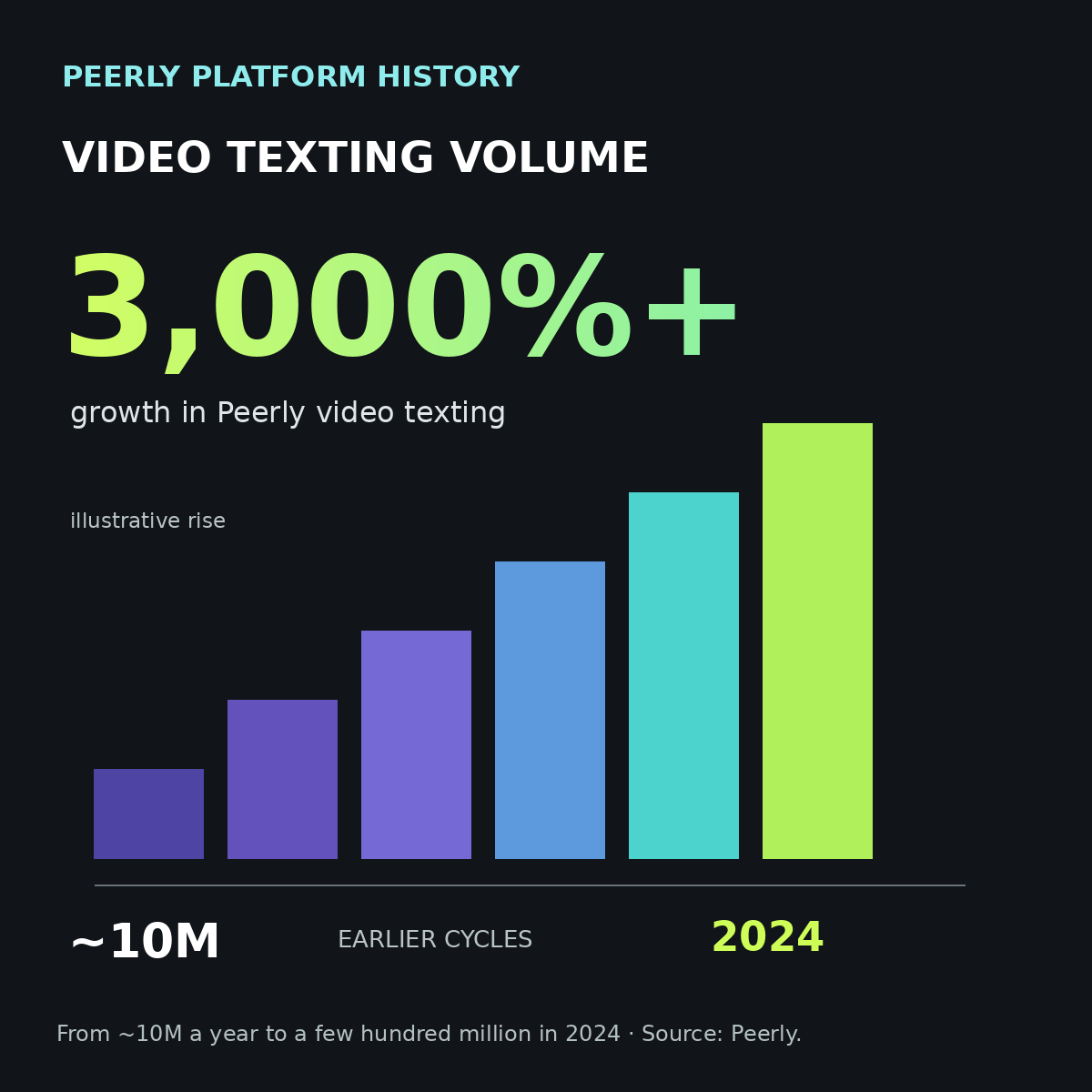
Peerly’s own platform history shows how quickly campaigns adopted the format once it became practical. Video-texting volume grew from roughly 10 million messages per year in earlier cycles to a few hundred million during the 2024 cycle, growth of more than 3,000 percent. Campaigns saw the opening and moved.
From experiment to a real media channel. The 3,000 percent increase is important because it reflects actual campaign behavior. Presidential campaigns, gubernatorial races, U.S. Senate campaigns, congressional contests and major political organizations expanded the format. Tens of millions of direct video messages continue to be delivered. What began as an experiment is becoming a recurring line in campaign budgets.
Donald J. Trump for President and Peerly received the 2025 Campaigns and Elections Reed Award for Best Use of SMS on a Campaign. An award is not a performance metric, but it is a sign of normalization. Direct video is increasingly being judged beside established campaign media instead of being treated as a novelty.
That is how a new channel forms. A few campaigns test it. The quality improves. The use cases expand. Volume grows. Teams stop asking whether it can work and start deciding how much of the plan it should own.
A new line in the political media plan. Battleground Impact projects that U.S. political texting for persuasion and mobilization will be a $750 million market in 2026 and reach $1.3 billion by 2032. The estimate places texting in the same broad spending conversation as established voter-contact channels, not as a novelty at the edge of a plan.
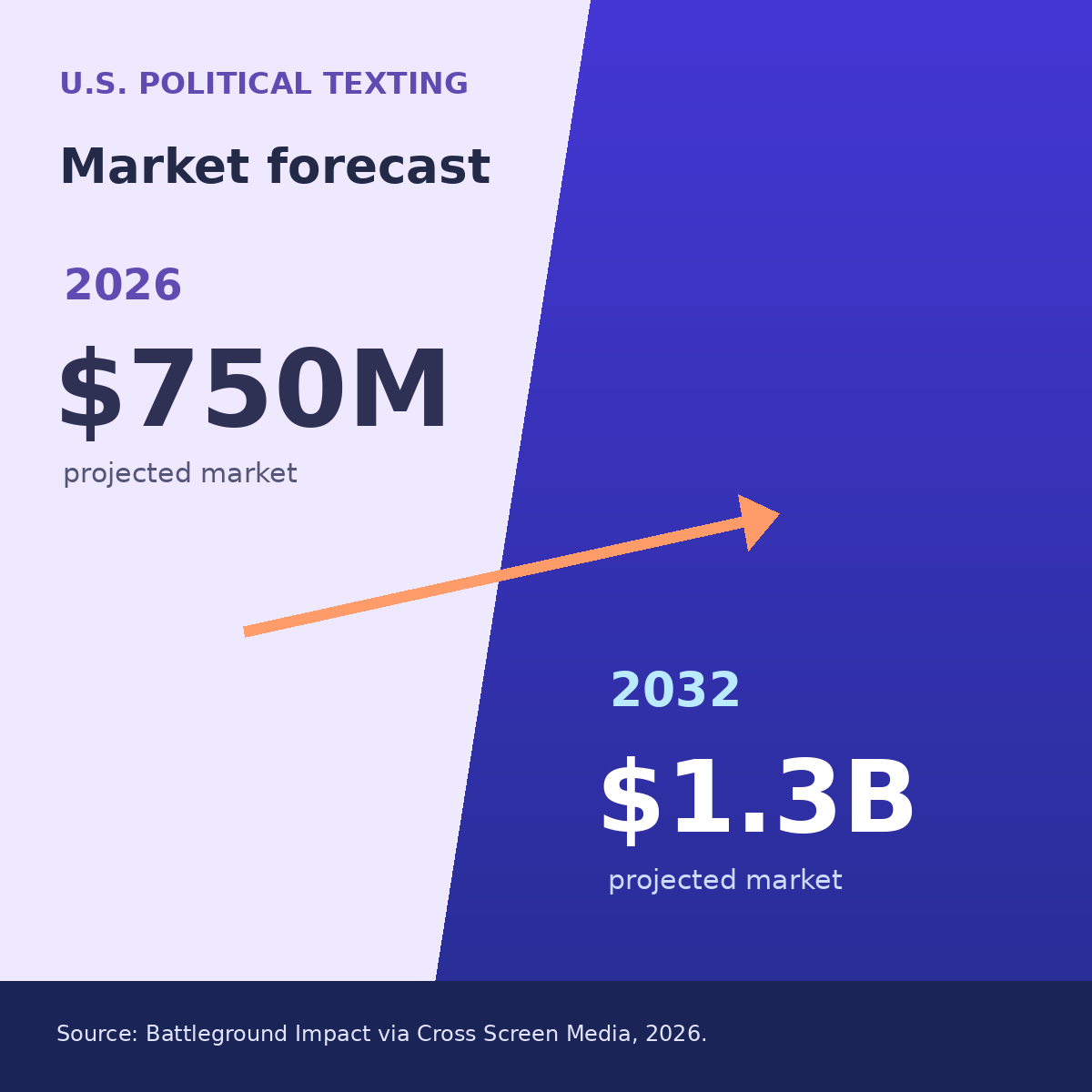
Cross Screen Media illustrates the scale with simple math. At an assumed average cost of three cents per text, a $750 million market would represent roughly 25 billion political text messages in 2026. Actual prices and message types vary widely, but the estimate shows how quickly texting has moved from a support function into a major voter-contact category.
The best use of direct video is not to replace every other medium. Television can create broad awareness. Social can generate discovery, repetition and public conversation. Connected television can add targeted reach. Direct-to-mobile video adds precision, context and interaction. It can reinforce the closing argument among persuadable voters, localize a statewide spot, reach supporters with turnout creative or take a fundraising message directly to past donors.
The budget math is changing. AdImpact projects a record $11.6 billion in U.S. political advertising during the 2026 cycle. More money means more commercials, more auctions and more competition for the same finite attention. The expensive mistake is not producing video. It is paying repeatedly to place that video where avoidance is the easiest action on the screen.
Broadcast television buys broad awareness. Cable buys zones and schedules. Streaming and social platforms sell targeted impressions inside systems they control. Direct-to-mobile video begins with the selected voter record and delivers the campaign’s creative to the associated device. That precision can reduce wasted reach and make the contact useful beyond the initial view.
For one standard MMS contact, a campaign can deliver the commercial, add up to 2,000 characters of context, include a trackable link, invite a reply and capture first-party engagement data. The proper comparison is not simply cost per video impression. It is cost per complete voter contact.
One creative asset can serve the entire campaign. A strong 30-second commercial no longer needs to live in a single media silo. The same core creative can be edited and deployed across television, connected television, social media and direct mobile delivery. What changes is the audience, framing and requested action.
- Persuasion. Send the closing argument or contrast message to voters who remain movable.
- Rapid response. Move a polished video into the field while a news moment is still shaping opinion.
- Fundraising. Put the candidate’s appeal directly in front of past donors with a trackable contribution link.
- Turnout. Send deadline, polling-location, ballot and election-day creative to identified supporters.
- Localization. Pair statewide creative with copy written for a county, district, issue or community.
- Events and organizing. Use video to recruit volunteers, fill rallies, collect sign requests and generate RSVPs.
This is why the channel can become more valuable late in a race. As the persuadable universe narrows and the campaign’s best arguments become clear, direct video can concentrate frequency on the voters who matter most without rebuilding the media plan from the ground up.
Measurement can change the next week of the campaign. Traditional reporting often arrives after the most useful decision window has closed. Direct mobile delivery can generate faster signals through link activity, replies, support identification, donations, volunteer interest, ballot requests and event registrations. Those signals do not merely describe what happened. They can help determine the next audience, creative and call to action.
A campaign can compare positive and negative creative, vary thumbnails, test local introductions and examine the effect of frequency. It can identify which segments are responding and which require a different argument. The result is a media program that learns while it runs instead of waiting for a final report.
The larger opportunity is coordination. If a voter responds positively to the video, the field program should know. If a donor clicks but does not complete a contribution, the fundraising team can follow up. If a voter raises an issue question, the campaign can answer it and record the concern. Media, organizing and data begin working from the same contact rather than separate impressions.
What campaigns can do right now
- Take the closing argument directly to persuadable voters. Put the campaign’s strongest video in front of the people who can still move the race.
- Turn rapid response into immediate reach. Move from a news moment to a polished mobile video contact while the story still matters.
- Make statewide creative feel local. Pair one strong video with message copy tailored by issue, geography, deadline or audience.
- Give supporters something to do. Connect the video to a donation, volunteer shift, event, ballot request, sign request or turnout action.
- Make every response useful. Capture support, opposition, questions and volunteer interest inside the same conversation.
- Reuse the creative the campaign already owns. Deliver existing television and digital assets with 4K clarity instead of watching them dissolve inside the feed.
Put Video In Motion on the next campaign
Video has already won the mobile screen. More than 200 billion daily Shorts views and a 75 percent share of mobile data traffic make that undeniable. But when 93 percent of people skip, ignore or block ads, buying more interruptions is not a media strategy. It is a warning sign.
Cross Screen Media’s report gives campaigns a glimpse of what happens when the message goes direct: a 16-point recall lift over control, greater recall among voters who opened more texts and ballot movement in the test market. Peerly adds the product campaigners need to act on that opening: up to 4K clarity, AI-assisted presentation, precise delivery and a reply path built into the contact.
This is bigger than adding video to a text message. It is a shift from rented attention to direct delivery. Keep the creative. Keep the emotion. Keep the motion. Change the distribution and put the campaign’s story directly into the hands of the voter who needs to see it.
Ready to see what your campaign looks like in motion? Experience Peerly Video In Motion™ in 4K clarity.
Sources and further reading
- Chauncey Southworth, “Does political texting work?” Impressions to Ballots, Cross Screen Media, Sept. 15, 2026
- Peerly, Your Ads Are Being Skipped Here Is the Billion Dollar Answer
- Peerly, Short Form Video Won How to Capitalize on It
- Ericsson Mobility Report, Mobile network traffic Q2 2026
- YouTube, Neal Mohan at Cannes Lions 2025
- Clutch, Ad Fatigue Is Real, 2025 consumer survey
- Deloitte, 2025 Digital Media Trends
- Peer reviewed study of attention and completion in digital video advertising
- Pew Research Center, Mobile Fact Sheet
- CTIA, Messaging industry data
- Reuters, AdImpact projects record 11.6 billion dollars in 2026 political advertising
- Campaigns and Elections, 2025 Reed Award Winners
- Peerly, Video Texting Up 3,000 Percent in 2024
- Peerly, Video in Motion